
FINEST KIND CLINIC AND FISHMARKET.... Discussing medicine, culture, and the joys of cooking Pansit.
Showing posts with label factoid. Show all posts
Showing posts with label factoid. Show all posts
Saturday, May 16, 2026


Friday, November 17, 2023
Palm tree and crescent moon
Nikki Haley's photo shows her wearing a palm tree and crescent moon pendant.
 This made me wonder: Was it a symbol of her Sikh heritage? a new age symbol?

Nope. it is from the South Carolina flag:
The crescent moon on the flag of South Carolina were added as a tribute to the decorative crescent that was on the South Carolina military uniforms during the Revolutionary War; the palmetto tree was added during the Civil War as the South Carolina state tree. The flag was updated and revised several times before it achieved the design seen on the current flag.
 |
| photo courtesy Champion Flags |
and a small correction: It is not a palm tree but a palmetto tree:
Nothing says South Carolina quite like the Palmetto tree. It’s on our state flag, and just about everything else across the state. South Carolinians unique love for the palmetto tree is a sense of pride that goes way back.,,
The palmetto is celebrated in historical significance dating back to the Revolutionary War. The British assault on Charleston on June 28, 1776 was denied by the thick palmetto walls of Fort Moultrie (called Fort Sullivan at the time). The walls were created by laying down large containment-forms of interlocked palmetto-trunks, then filling up their interior spaces to a considerable height with shoveled sand topped off with stacked sandbags. British cannonballs simply bounced off the dense mass of the palmetto logs. At that moment, a legend was born
Wednesday, March 09, 2022
Let's go fly a kite
It is already "tag init", the hot season before the monsoon comes in June. Not too hot yet, and there are a lot of nice breezes to keep you cool if you stay under the shade.
And yesterday, while out walking the dog I saw that the kids had started flying their kites.
Lolo showed me how to make a kite similar to what is flown here, but nowadays we have all sorts of kites being flown by the kids: plain kites, box kites, decorative kites etc.
here is a video of kids flying their home made kites:
so who invented kites? The Chinese of course, over 2000 years ago.
from national kite month webapge:
The exact date and origin of the kite is not known but it is believed that they were flown in China more than two thousand years ago. One legend suggests that when a Chinese farmer tied a string to his hat to keep it from blowing away in a strong wind, the first kite was born....
it then spread all over, including down the trade routes to the west. The earliest record of kite use was in China 200 BC when it was used in war. Full history at the link.
wikipedia however notes that a cave painting from 9000 BC found in Indonesia depicted a kite similar in design to kites still used in that area, LINK2 and is still made from leaves and bamboo in that area. Before Islam, locals used kites to carry messages to heaven, but now use them recreationally.
so maybe the Chinese borrowed the idea from them.
Video on Benjamin Franklin's kite experiment.
his invention of the lightning rod probably saved many lives.
altogether now:
Saturday, May 23, 2020
Factoid of the day
We're watching a K drama the King eternal monarch, (also on netflix) about an alternative universe where the Koreans fought off the Qing and became a super power.
It has a very confusing plot with the king and his murderous uncle going back and forth between parallel universes, and there is a magic flute and a special sword in the plot just to confuse matters more.
The King is searching for the ladycop who saved his life, and of course falls in love with her...
Hallmark channel, stuff but a lot better;
but when the policeman from South Korea visits the king's alternative universe, she discovers why the king is very rich: because he owns all the rare earth metals in the nothern part of the kingdom.
Uh what?
April 2019 article in National interest.org:
well, that explains why China doesn't want Kim to be nice, and why Trumpieboy pointed out to Kim that letting the west develop their resources might lead to everyone there being rich...
Yet in all the discussions about this last year, I hadn't heard any of this mentioned. Maybe I missed it, or maybe none of the MSM noticed it.
It has a very confusing plot with the king and his murderous uncle going back and forth between parallel universes, and there is a magic flute and a special sword in the plot just to confuse matters more.
The King is searching for the ladycop who saved his life, and of course falls in love with her...
Hallmark channel, stuff but a lot better;
but when the policeman from South Korea visits the king's alternative universe, she discovers why the king is very rich: because he owns all the rare earth metals in the nothern part of the kingdom.
Uh what?
April 2019 article in National interest.org:
Billions in the Ground: The Race to Harvest North Korea's Rare Earth Reserves
Recent studies suggest that North Korea could have the world’s largest deposit of rare earth elements.
well, that explains why China doesn't want Kim to be nice, and why Trumpieboy pointed out to Kim that letting the west develop their resources might lead to everyone there being rich...
Yet in all the discussions about this last year, I hadn't heard any of this mentioned. Maybe I missed it, or maybe none of the MSM noticed it.
Wednesday, May 29, 2019
Pre Eskimos?
I wasn't aware that there was a pre Eskimo culture.
NatGeo article about them.
The culture may have died off after meeting modern Inuit, or maybe from Viking diseases.
They had a rare variation of the D2 haplogroup, and although the Nat Geo article says there was no interbreeding or contact, modern studies in Alaska show that this rare haplogroup is indeed found among some of the modern Inuit.
Wikipedia on the Dorset culture.
uh, Pre Dorset culture? Wikipedia article on them:
I never worked in Alaska so much of this is something I will have to explore later if I get around to it.
One thing that brought this up was that we had watched the film "Lost in the Barrens", based on the book by Canadian Naturalist Farley Mowatt.
The boys were warned not to go into the barrens which were haunted by a reclusive people who killed intruders, and so that area was avoided by the local Indians even when they needed food.
But they ended up being rescued by these "Eskimos".
People magazine article on the author and his book Never Cry Wolf (ebook here) which was being made into a Disney movie.
Farley wrote a book about the People of the Deer about the Eskimo hunters who helped him, and the white man's incursions into their land, but it makes me wonder if the author wasn't using the legend of the strong but reclusive remnants of this group as part of his novel. ( ebook on internet archives with free registration)
I can't find a freebie version of Never Cry Wolf, but the movie Lost in the Barrens can be watched at Youtube, as can the follow up movie.
NatGeo article about them.
Inuit hunters in the Canadian Arctic have long told stories about a mysterious ancient people known as the Tunit, who once inhabited the far north. Tunit men, they recalled, possessed powerful magic and were strong enough to crush the neck of a walrus and singlehandedly haul the massive carcass home over the ice.
the stories described the Tunit as a reticent people who kept to themselves, avoiding contact with their neighbors.Many researchers dismissed the tales as pure fiction, but a major new genetic study suggests that parts of these stories were based on actual events.
In a paper to be published Friday in Science, evolutionary geneticist Eske Willerslev and molecular biologist Maanasa Raghavan, both of the University of Copenhagen, Denmark, and their colleagues reveal for the first time that the earliest inhabitants of the Canadian Arctic—a group that archaeologists call the Paleo-Eskimos—lived in isolation from their neighbors for nearly 4,000 years, refraining from any mixture with Native Americans to the south or with the ancestors of the modern Inuit.
The culture may have died off after meeting modern Inuit, or maybe from Viking diseases.
They had a rare variation of the D2 haplogroup, and although the Nat Geo article says there was no interbreeding or contact, modern studies in Alaska show that this rare haplogroup is indeed found among some of the modern Inuit.
Wikipedia on the Dorset culture.
Remains of a Dorset stone longhouse in Cambridge Bay, Nunavut Carving of a polar bear The Dorset was a Paleo-Eskimo culture, lasting from 500 BC to between 1000 and 1500 AD, that followed the Pre-Dorset and preceded the Inuit in the Arctic of North America.
uh, Pre Dorset culture? Wikipedia article on them:
the Canadian Museum of history has this article on the Dorset culture:
The Pre-Dorset is a loosely defined term for a Paleo-Eskimo culture or group of cultures that existed in the Eastern Canadian Arctic from c. 3200 to 850 cal BC,[1] and preceded the Dorset culture.[2] Due to its vast geographical expanse and to history of research, the Pre-Dorset is difficult to define. The term was coined by Collins (1956, 1957) who recognised that there seemed to be people that lived in the Eastern Canadian Arctic prior to the Dorset, but for whose culture it was difficult to give the defining characteristics.
 |
| 1) Inuit 2) Northern Indian Lands 3) Dorset Culture 4) Norse Colonies |
------------------------------
"The Tunit were a strong people, and yet they were driven from their villages by others who were more numerous, by many people of great ancestors; but so greatly did they love their country, that when they were leaving Uglit, there was a man who, out of desperate love for his village, harpooned the rocks and made the stones fly about like bits of ice." Ivaluardjuk, Igloolik, 1922
I never worked in Alaska so much of this is something I will have to explore later if I get around to it.
One thing that brought this up was that we had watched the film "Lost in the Barrens", based on the book by Canadian Naturalist Farley Mowatt.
The boys were warned not to go into the barrens which were haunted by a reclusive people who killed intruders, and so that area was avoided by the local Indians even when they needed food.
But they ended up being rescued by these "Eskimos".
People magazine article on the author and his book Never Cry Wolf (ebook here) which was being made into a Disney movie.
Farley wrote a book about the People of the Deer about the Eskimo hunters who helped him, and the white man's incursions into their land, but it makes me wonder if the author wasn't using the legend of the strong but reclusive remnants of this group as part of his novel. ( ebook on internet archives with free registration)
I can't find a freebie version of Never Cry Wolf, but the movie Lost in the Barrens can be watched at Youtube, as can the follow up movie.
Wednesday, February 27, 2019
Korean Crow Tits
 |
| http://disq.us/p/201eq89 |
but it has a different meaning in Korea:
the song is here:
there's a phrase in Korean "뱁새가 황새 걸음을 걸으면 가랑이가 찢어진다" which means "if a crow-tit walks like a stork, it will break its legs." The meaning is that you’ll ruin yourself if you try to imitate someone better than you. you should research about the song it's a rly meaningful song👍👍👍
and full explantion here:


Monday, September 11, 2017
WORDS WORDS WORDS
The OED has a blog? Who wudda thot? and today they discuss their favorite words.
here is one example:

and yes, it has a Doctor Who link.
Headsup Father Z
‘I really like the word petrichor (“A pleasant, distinctive smell frequently accompanying the first rain after a long period of warm, dry weather in certain regions”), because (1) I like the thing it signifies very much (2) there aren’t many nouns referring to specific smells I don’t think (3) the word itself sounds very fantasy-fiction-y (4) I think it’s a good name for a cat.’

and yes, it has a Doctor Who link.
Headsup Father Z
Tuesday, January 31, 2017
The Templar conspiracy
BBC article on the history of banking in Medieval Europe.
The Chinese government developed notes to take money with you without carrying cash for robbers to steal, but the Knights Templar were the ones who developed this outside of the hands of kings.
when they were "disbanded", the Italian merchant families took over...
more HERE
The Chinese government developed notes to take money with you without carrying cash for robbers to steal, but the Knights Templar were the ones who developed this outside of the hands of kings.
A pilgrim could leave his cash at Temple Church in London, and withdraw it in Jerusalem. Instead of carrying money, he would carry a letter of credit. The Knights Templar were the Western Union of the crusades....
The Knights Templar did much more than transferring money across long distances.
As William Goetzmann describes in his book Money Changes Everything, they provided a range of recognisably modern financial services.
when they were "disbanded", the Italian merchant families took over...
more HERE
If you are reading this, blame a Jesuit
If you are reading this, blame a Jesuit.
Father Z links to a NCReg story of the priest who developed hypertext., the way computers can talk with humans.
Father Z links to a NCReg story of the priest who developed hypertext., the way computers can talk with humans.
In 1949, Fr. Busa met Thomas J. Watson, the founder of IBM, and convinced him to sponsor the Index Thomisticus Project,,.
Busa asked Watson to team up on a project that would make word searches on a computer possible. Mr. Watson shook his head and said, "It's impossible for machines to do what you are suggesting. You are claiming to be more American than us." The Jesuit did not give up and slid a punched card bearing the multinational company’s motto, promulgated by Watson himself, towards the CEO. It read: “The difficult, we do it immediately. The impossible takes a little longer.” ...
And, upon that fateful day, at that fateful moment, in a handshake between colleagues and geniuses, the computer became a great deal more "user friendly."
The result of this meeting was "hypertext"—the overall structure of pieces of information displayed on a computer display, or other electronic devices, with references (hyperlinks) to other text which the reader can immediately access, linked to each other by dynamic connections that may be consulted on a computer at the click of a mouse.
Saturday, August 27, 2016
Factoid of the day
The name of the MGM lion was Jackie: Jackie the Lucky.

Find out why HERE, and also the persons behind other logos.
The lady bearing the torch is identified, but only for the redesign.
ReelClassics discusses the many real ladies behind the logo at various times.
she represents Lady Liberty
headsup the Presurfer

The lady bearing the torch is identified, but only for the redesign.
ReelClassics discusses the many real ladies behind the logo at various times.
she represents Lady Liberty
headsup the Presurfer
Sunday, May 15, 2016
Factoid of the day
via StrategyPage:
ISIS is using carrier pidgeons to send messages to their "refugees" in Jordan
SP includes a short summary of using the pidgeons in wartime, but what is that about the Bedouins being experts in spotting and taking down the birds?
There is a long history of falconry in the desert:
UAE report on Bedouin falconry.
more photos at NatGeo.
Related item: The use of pidgeons to carry military information goes back 3000 years.
ISIS is using carrier pidgeons to send messages to their "refugees" in Jordan
some of the million or more Syrian refugees in Jordan are actually ISIL members or sympathizers. ISIL has learned to be very careful with communications so that their few operatives in Jordan remained undiscovered by the police. Now that the Jordanians are aware of the ISIL use of carrier pigeons they can bring in specialists (Bedouins expert in spotting and taking down birds) to deal with the problem.
SP includes a short summary of using the pidgeons in wartime, but what is that about the Bedouins being experts in spotting and taking down the birds?
There is a long history of falconry in the desert:
UAE report on Bedouin falconry.
 |
| Rashid Hamad Al Suwidi has been training falcons since he was six, when his father gave him his first bird. |
--DUBAI // Falcons have been an indispensable hunting tool for Bedouin for hundreds of years. More than that, they have often come to be regarded as a family member.And the necessity of survival in the desert meant a strong bond of trust was forged between the falconer and his bird.
"They played an important role in helping families to survive in the desert," said Margit Mueller, the director of the Falcon Hospital in Abu Dhabi. "For that reason, they were integrated into the family. They were not merely a tool, they became regarded as a family member, even as a child."
more photos at NatGeo.

Related item: The use of pidgeons to carry military information goes back 3000 years.
It is said necessity is the mother of invention but more often than not war gives rise to them both. Falconry and the use of Carrier Pigeons are no exception. The practice of both is believed to have started in Egypt over 3000 years ago....
It can be speculated out of a needed to disrupt these communication lines the art of Falconry was born. Generally it is thought of as a sport and after the crusades became associated with the nobility of Europe. However the gamesmanship was primary used for hunting food; trained falcons and other birds of prey helped the Bedouin tribes of the eastern deserts survive 1000 of years ago by catching small animals.
Friday, April 22, 2016
Podcast of the week:
BBC InOurTime podcast this week is about the Year without a summer.
Caused by a volcanic eruption in Indonesia:
and notice that part about Europe recovering from the Napoleonic wars? LINK Five million dead? Who knows.
notice about a half of the "French military" casualties were from disease, and many were of "allies" where Napoleon pressured local gov'ts to join him. Half of Napoleon's "Grand Army" that invaded Russia were not French.
BBC story here which meant fewer young men to farm the fields...
yes, there were major famines in Europe in the 1800's...this was only one of several (more occured in the 1840's).
One result of the cold weather was that a bunch of hippies sat around and wrote stories: Teenager Mary Shelley wrote Frankenstein, and probably influenced culture more than her poet husband, who no body reads except under duress in school.
Caused by a volcanic eruption in Indonesia:
Tambora has been linked with drastic weather changes in North America and Europe the following year, with frosts in June and heavy rains throughout the summer in many areas. This led to food shortages, which may have prompted westward migration in America and, in a Europe barely recovered from the Napoleonic Wars, led to widespread famine.more at Wikipedia.
and notice that part about Europe recovering from the Napoleonic wars? LINK Five million dead? Who knows.
notice about a half of the "French military" casualties were from disease, and many were of "allies" where Napoleon pressured local gov'ts to join him. Half of Napoleon's "Grand Army" that invaded Russia were not French.
BBC story here which meant fewer young men to farm the fields...
yes, there were major famines in Europe in the 1800's...this was only one of several (more occured in the 1840's).
One result of the cold weather was that a bunch of hippies sat around and wrote stories: Teenager Mary Shelley wrote Frankenstein, and probably influenced culture more than her poet husband, who no body reads except under duress in school.
Wednesday, April 20, 2016
GeoEnglineering a barren island
BBC has a nice article about Ascension Island, an isolated island in the Pacific, was literally a desert island in the middle of nowhere.

from Wikipedia:
And if it is a paradise today, blame Charles Darwin. Again from the BBC article:
The Wiki article notes that the UK would like to claim sovereignty of the local octean (for it's mineral and petroleum rights).
finally, the island has an emergency landing strip for the US Space Shuttle, which is now, of course, no longer in service.
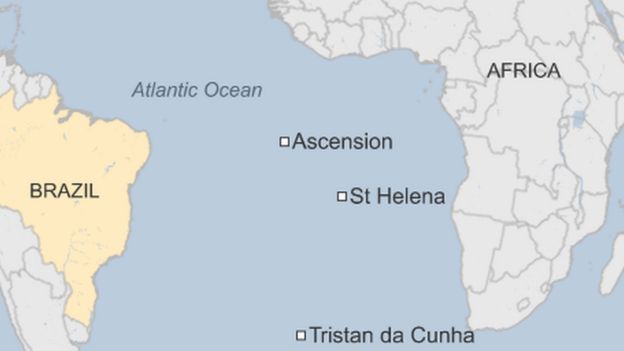
from Wikipedia:
Dry and barren, the island had little appeal for passing ships except for collecting fresh meat, and was not claimed for the Portuguese Crown. Mariners could hunt for the numerous seabirds and the enormous female green turtles that laid their eggs on the sandy beaches. The Portuguese also introduced goats as a potential source of meat for future mariners.
And if it is a paradise today, blame Charles Darwin. Again from the BBC article:
when the British garrisoned Ascension to discourage French attempts at rescuing Napoleon - who had been exiled to St Helena, the nearest point of land, 700 miles southeast - they too could find virtually no fresh water.
"Near the coast, nothing grows," wrote Charles Darwin. "The island is entirely destitute of trees."
Darwin discussed how to make Ascension more habitable for humans with his friend Joseph Hooker, later director of the Royal Botanic Gardens at Kew, who visited in 1843. Hooker devised a plan. He would plant trees all over the 859m (2817ft) summit of Green Mountain, Ascension's highest point. Foliage would trap moisture from the warm southeasterly winds that sweep continuously over, letting it drip down to ground level to assure a water supply for the troops. He would introduce grasses to create pasture for livestock, and soil to plant vegetables.to make the ecology worse, in the 1980's, someone brought in another bush with a deep taproot that is now taking over the place:
Engineers arrived in the mid-60s to construct transmitters to beam World Service programming to Africa and South America. They built a new village, a few miles inland from the sleepy capital, Georgetown - and planted a type of mesquite, known as Mexican thorn, to bind the dry soil.
Today the dry, stiff-thorned mesquite runs riot, dominating whole swathes of Ascension's terrain. "A conservative estimate is that there's now about 38,000 of these bushes," says Weber. "It's very difficult to control physically - it puts down tap roots that can be 20-30m deep - so we're looking at biological methods of control, bringing in pest species that are specific to this shrub from its native range."well, that might make the ecology types unhappy, but the Mesquite bush does have value as a food plant etc. LINK link2
The Wiki article notes that the UK would like to claim sovereignty of the local octean (for it's mineral and petroleum rights).
finally, the island has an emergency landing strip for the US Space Shuttle, which is now, of course, no longer in service.
Sunday, April 03, 2016
Factoid of the day
According to Improbable research, an undertaker invented the telephone switching idea because an operator was directing business to a competitor.
link at 99percentinvisible has the whole story of the invention of the Strowger switch.
link at 99percentinvisible has the whole story of the invention of the Strowger switch.
Saturday, March 26, 2016
Factoid of the day
WHERE IS SHAKESPEARE?
Radar scan of his grave says there is no skull inside.
An old rumor says someone stole it over a bet, and it ended up in another church LINK
and while checking the story, I learned that Shakespeare's sonnets have been encoded in DNA: from Nature...
huh? They still use tape drives?
Radar scan of his grave says there is no skull inside.
An old rumor says someone stole it over a bet, and it ended up in another church LINK
But the local church authorities there refuse to disturb the grave for DNA testing based on a vague rumor.
According to local folklore, the skull, in a vault beneath Sheldon chapel at St Leonard's Church in Beoley, Redditch, was stolen from the playwright’s tomb in Stratford as part of a wager set by the art historian Horace Walpolein the 1700s.
and while checking the story, I learned that Shakespeare's sonnets have been encoded in DNA: from Nature...
The project, led by Nick Goldman of the European Bioinformatics Institute (EBI) at Hinxton, UK, marks another step towards using nucleic acids as a practical way of storing information — one that is more compact and durable than current media such as hard disks or magnetic tape...
DNA packs information into much less space than other media. For example, CERN, the European particle-physics lab near Geneva, currently stores around 90 petabytes of data on some 100 tape drives.
huh? They still use tape drives?
Friday, March 11, 2016
Backstories behind the news
Diversity is good, right?
Uh, maybe: but actual studies don't back up that widely held assumption.
As a woman who is scientifically oriented, might I suggest that including a woman who thinks like a man might not be diversity; including a radical "feminist" is diversity, but might not help you, since she sees you (and most other women) as the enemy and has an agenda to push her radical views on the company will not help, but including a woman who actually has experience in the real world might indeed help.
where diversity helps is when the group can become a group, with interpersonal relationships and trust.
so why should people object when these fake claims are made?
Uh, maybe because it makes a lot of us with a hard science background suspicious that "social science" is just a way to push a political agenda, more "social" and not really science...
or as the article notes:
============
News reports on Fukushima affecting health were few.
Yes, which is why you need to read sites like Mom Jones or listen to "conspiracy" radio programs like C2C...
----------------
BEER!
South and Meso American Indians drank beer made from corn before Colombus.
And WesternDigs has the backstory: reconstructing diet via tarter on teeth. Fascinating study: one of several ways to figure out what was eaten in the past.
they note stories that this was used "ritually", but I suspect folks just brewed and drank it in the same way ordinary folks do today...
My (adopted) son relates how his grandmother would brew a batch and the neighbors would come over and drink it while listening to the portable radio (no electricity in their town).
Western Digs webpage includes link to stories of cocoa and other drinks...including a drink that induces vomiting that might indeed be part of a ritual.
I just finished reading a story where a Navajo sing ended by the person going out and vomiting the evil spirit. What is interesting about this is that Derek Prince the Pentecostal preacher mentions that in serious cases of demon oppression, sometimes vomiting the spirit shows you have been delivered.
Psychologically it makes sense. And of course, doctors until recent times purged and induced vomiting as a cure for various diseases.
Wonder if there is a study on the history of vomiting in medicine on the web? Will have to google about it later.
----------------
Do you understand cat? And does your cat understand you?
I understand cat, but I always assumed they understood me but preferred to ignore me.

-----------------
Uh, maybe: but actual studies don't back up that widely held assumption.
As a woman who is scientifically oriented, might I suggest that including a woman who thinks like a man might not be diversity; including a radical "feminist" is diversity, but might not help you, since she sees you (and most other women) as the enemy and has an agenda to push her radical views on the company will not help, but including a woman who actually has experience in the real world might indeed help.
where diversity helps is when the group can become a group, with interpersonal relationships and trust.
so why should people object when these fake claims are made?
Uh, maybe because it makes a lot of us with a hard science background suspicious that "social science" is just a way to push a political agenda, more "social" and not really science...
or as the article notes:
First of all, social science myths make a mockery of evidence-based advocacy and policy.
============
News reports on Fukushima affecting health were few.
a lot of US sailors were nearby. And the seafood caught nearby was contaminated.
Corporations and government agencies had disproportionate access to framing the event in the media, Pascale says. Even years after the disaster, government and corporate spokespersons constituted the majority of voices published.
Read more at: http://phys.org/news/2016-03-news-coverage-fukushima-disaster-health.html#jCp
Yes, which is why you need to read sites like Mom Jones or listen to "conspiracy" radio programs like C2C...
----------------
BEER!
South and Meso American Indians drank beer made from corn before Colombus.
And WesternDigs has the backstory: reconstructing diet via tarter on teeth. Fascinating study: one of several ways to figure out what was eaten in the past.
they note stories that this was used "ritually", but I suspect folks just brewed and drank it in the same way ordinary folks do today...
My (adopted) son relates how his grandmother would brew a batch and the neighbors would come over and drink it while listening to the portable radio (no electricity in their town).
Western Digs webpage includes link to stories of cocoa and other drinks...including a drink that induces vomiting that might indeed be part of a ritual.
I just finished reading a story where a Navajo sing ended by the person going out and vomiting the evil spirit. What is interesting about this is that Derek Prince the Pentecostal preacher mentions that in serious cases of demon oppression, sometimes vomiting the spirit shows you have been delivered.
Psychologically it makes sense. And of course, doctors until recent times purged and induced vomiting as a cure for various diseases.
Wonder if there is a study on the history of vomiting in medicine on the web? Will have to google about it later.
----------------
Do you understand cat? And does your cat understand you?
I understand cat, but I always assumed they understood me but preferred to ignore me.

-----------------
Friday, January 08, 2016
Cow Patties
AnnAlthouse reports:You can buy cow dung from Amazon India.
used in Hindu purification rituals but hard to get in large cities.
In rural India, they burn dung for fuel (it provides a steady fire that isn't too hot) and use it for flooring in their huts.
I'm not sure how it is done in India, but in Africa, the hut floors were not "dirt" but dung mixed with anthill clay: it would be hard as cement, and easy to keep clean.
MyKenyaExperience blog explains how the floors are cleaned and renewed periodically using dung and sand.
and AncientHealthwebsite has an article on it's use in India: and notes that it discourages insects.
and some Texas lasses are selling it to burn as "organic mosquito repellant"
Most rural folks in the midwest and western US know that dried cow dung does not smell. In the USA, it is mostly sold as fertilizer.
and then there are the cow chip throwing contests in Oklahoma.
used in Hindu purification rituals but hard to get in large cities.
In rural India, they burn dung for fuel (it provides a steady fire that isn't too hot) and use it for flooring in their huts.
I'm not sure how it is done in India, but in Africa, the hut floors were not "dirt" but dung mixed with anthill clay: it would be hard as cement, and easy to keep clean.
MyKenyaExperience blog explains how the floors are cleaned and renewed periodically using dung and sand.
and AncientHealthwebsite has an article on it's use in India: and notes that it discourages insects.
and some Texas lasses are selling it to burn as "organic mosquito repellant"
Most rural folks in the midwest and western US know that dried cow dung does not smell. In the USA, it is mostly sold as fertilizer.
and then there are the cow chip throwing contests in Oklahoma.
There’s no wrong way to toss a cow turd. But veterans of the World Championship Cow Chip Throwing Contest in Beaver, Oklahoma, will tell you that throwing overhanded will send it farther than a Frisbee-style fling, and a flick of the wrist at the release will help counter the persistent plains winds that threaten to send the chip out of bounds. And they’ll tell you, if it’s your first time, that licking your fingers between throws (you get two chances) will give you good luck and a better grip.
Friday, November 27, 2015
Factoid of the day
via Presurfer:
Clare Booth Luce's erratic behavior as Ambassador to Italy was eventually blamed on Arsenic from her wall paper. More about Luce HERE.
Carl Scheele managed to keep his name attached to Scheele’s green. Mix sodium carbonate and arsenic oxide together in a solution and you get sodium arsenic—a combination of sodium, arsenic, and oxygen. That gets mixed in with copper sulfate to produce a copper arsenite precipitate which can cheaply and easily dye material green....In 1982, British chemist David Jones famously speculated that the green wallpaper hung in Napoleon’s residence in St. Helena poisoned him with arsenic and led to his death. The theory is much-disputed, but also very popular.Wikipedia has a list of people who may have suffered from lead poisoning.
Clare Booth Luce's erratic behavior as Ambassador to Italy was eventually blamed on Arsenic from her wall paper. More about Luce HERE.
Monday, November 02, 2015
Yeti story of the week
BBC relates stories of people who saw yetis, yet notes that few people see them nowadays.
Why?Because people don't invade their habitat anymore, thanks to modernity.
Why?Because people don't invade their habitat anymore, thanks to modernity.
Now, says Norbu, people don't need to go up to the mountain to collect wood or graze their animals. They cook on gas rings, and farming patterns have changed. The villagers spend more of their time growing cash crops such as potatoes and oil seeds.
Where sundown used to be the end of the day, now, with electricity, villagers weave late into the evening - making rugs and shawls to sell at craft markets as far away as the capital Thimpu.
Saturday, October 10, 2015
Factoid of the day: Caterpillars take two
I got interrupted when I posted below about the huge ugly caterpillar.
The photo of the moth reminded me of the huge Atlas Moth that we have here in the Philippines.
Their caterpillars aren't quite as ugly as the one cited below, but they are pretty ugly...
This Singapore website has more information...They are related to silk worm moths.
more on Fagara silk HERE
and HERE. at Univ MS
Jennifer Seltzer's page at UnivMississippi has a table listing quite a few silk producing insects LINK
wild silk and regular silk could be cultivated here (and is, in small amounts) but lacking money to build up the industry, it is easier for mountain farmers to grow marijuana alas.
more about the Philippine silk industry HERE. and here.
The photo of the moth reminded me of the huge Atlas Moth that we have here in the Philippines.
 |
| Peggy Notebaert Nature Museum, Chicago, Illinois. |
 |
| http://www.cambstimes.co.uk/giant_atlas_moth_caterpillars_by_matthew_usher_1_930273 |
This Singapore website has more information...They are related to silk worm moths.
While the Silkworm Moth (Bombyx mori, which belongs to a different but related family) which makes its cocoon out of one unbroken silk strand, the Atlas Moth caterpillar makes it out of broken strands of silk. Nevertheless, Atlas Moth cocoons are used to make a durable silk called Fagara Silk, in northern India. In Taiwan, their cocoons are made into pocket purses!
more on Fagara silk HERE
and HERE. at Univ MS
The silk from Attacus atlas is various shades of brown and tan, depending on the foodplant used for the caterpillars. The woven fabric is always the natural brown and beige colors; we have not seen any examples where it has been dyed. Some of the products for atlas and Cricula silk include purses, shoes, jackets, shirts, lampshades, and scarves. The “attacus silk,” as it is called in Indonesia, is also exported to Japan to make obis. An obi is a wide and very long belt worn with a kimono.
Jennifer Seltzer's page at UnivMississippi has a table listing quite a few silk producing insects LINK
wild silk and regular silk could be cultivated here (and is, in small amounts) but lacking money to build up the industry, it is easier for mountain farmers to grow marijuana alas.
more about the Philippine silk industry HERE. and here.
Subscribe to:
Posts (Atom)